
Lumbar decompression surgery relieves pressure on the spinal cord or nerve roots in the lower back by removing the bone, disc, or ligament tissue that's causing the compression. It's most commonly performed to treat spinal stenosis, a gradual narrowing of the spinal canal that often causes leg pain, numbness, or weakness that worsens with standing or walking. Surgery is typically considered only after non-surgical treatment, such as physical therapy, injections, or medication, has failed to provide relief.
Dr. Brett Taylor is a board-certified orthopedic spine surgeon practicing at Town & Country Crossing Orthopedics (TCCO) in St. Louis, Missouri. He evaluates each case individually, using diagnostic imaging and clinical history to determine whether decompression is the appropriate course of treatment and which surgical technique best addresses the specific area of compression.
Attorneys and physicians working with a client or patient who may need this type of care can submit a referral to begin the review process.
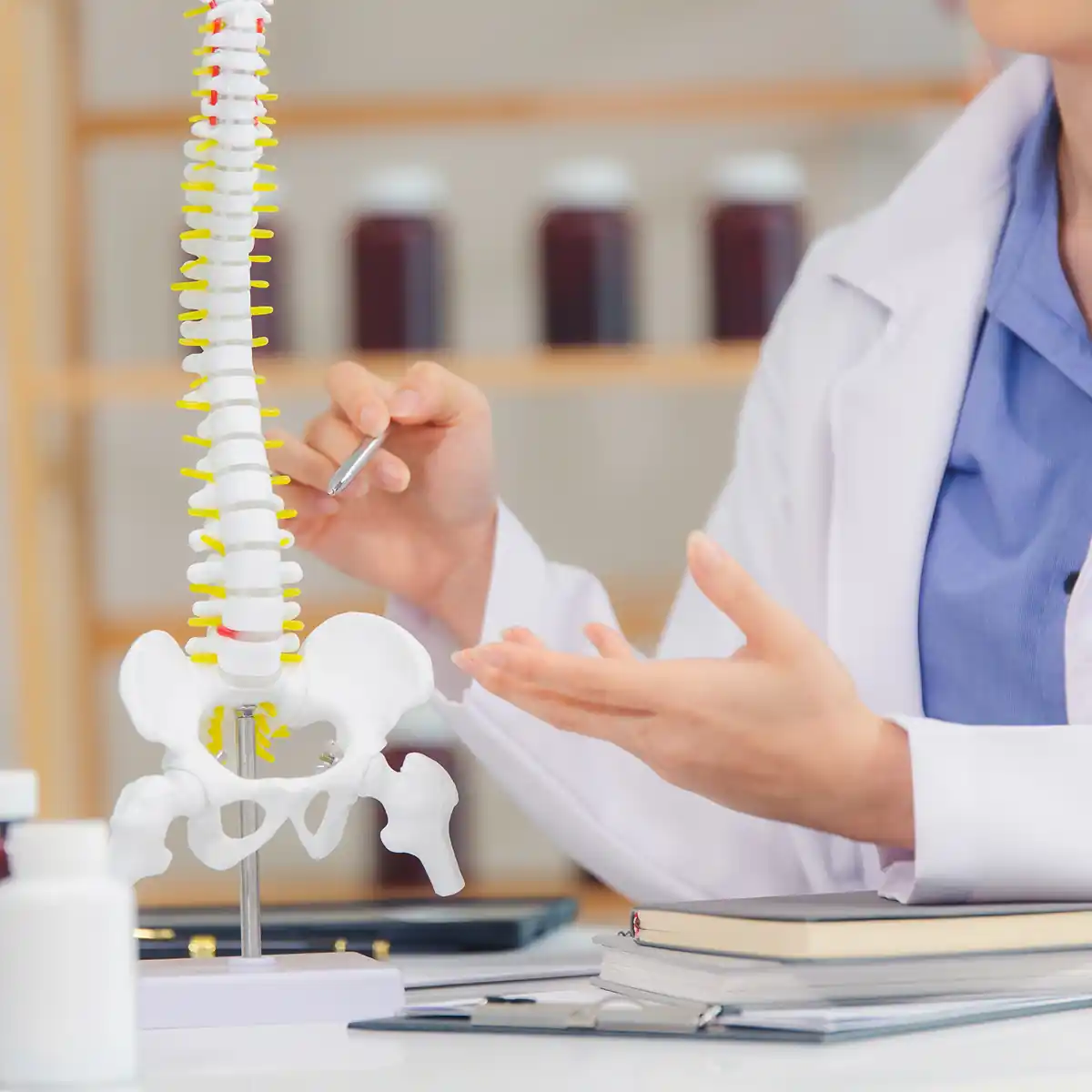
Lumbar decompression procedures vary depending on the exact structure causing the compression and how many levels of the spine are involved:
In some cases, decompression alone doesn't provide sufficient spinal stability, particularly when a patient also has spondylolisthesis or another form of spinal instability. In those cases, Dr. Taylor may recommend performing decompression alongside a lumbar fusion to stabilize the treated segment.
Lumbar decompression is sometimes confused with microdiscectomy, but the two address different problems. Decompression procedures like laminectomy and foraminotomy are generally used to treat spinal stenosis, where the spinal canal itself has narrowed due to degenerative changes. Microdiscectomy specifically targets a herniated disc pressing on a nerve. Some patients require both, depending on what's shown on imaging.
Lumbar decompression surgery is most often recommended for:
Attorneys handling cases that involve a lumbar spine diagnosis, and who need an independent medical opinion rather than a referral for treatment, can learn more about our expert witness and legal services.
A lumbar laminectomy is the most common type of lumbar decompression surgery. It involves removing the lamina, the bony arch that forms the back of the spinal canal, to relieve pressure on the spinal cord or nerve roots. It's typically performed to treat spinal stenosis, a narrowing of the spinal canal that often develops gradually due to age-related degenerative changes.
Lumbar decompression treats a narrowed spinal canal, most commonly through a laminectomy or foraminotomy, while microdiscectomy removes a herniated disc pressing on a nerve. Both are forms of spinal decompression treatment in a broad sense, since both relieve nerve pressure, but they address different underlying causes. Imaging and a clinical exam determine which procedure, or combination of procedures, fits a given case.
Patients and referring physicians researching the best orthopedic doctors in St. Louis for spine care generally look for board certification, fellowship training specific to spine surgery, and a track record across a range of decompression and fusion procedures. Dr. Brett Taylor is a board-certified orthopedic spine surgeon with fellowship training in spine surgery, practicing at TCCO in St. Louis, Missouri.
Referring physicians and attorneys can submit a referral [Refer Your Patient or Client] describing the patient or client's diagnosis and relevant history to begin the review process. Once received, Dr. Taylor reviews the case to determine whether decompression, fusion, or another approach is the appropriate next step, and next steps are coordinated directly with the referring party.