
Microdiscectomy surgery removes the portion of a herniated disc pressing on a spinal nerve in the lower back, relieving the pain, numbness, or weakness that results from the compression. Common lumbar disc herniation symptoms include sciatica, pain radiating down the leg, and weakness in the foot or leg that worsens with certain movements or positions. Surgery is typically considered once non-surgical treatment, such as physical therapy, injections, or medication, has failed to relieve symptoms.
Dr. Brett Taylor is a board-certified orthopedic spine surgeon practicing at Town & Country Crossing Orthopedics (TCCO) in St. Louis, Missouri. He evaluates each case individually, using diagnostic imaging and clinical history to determine whether microdiscectomy is the appropriate course of treatment.
Attorneys and physicians working with a client or patient who may need this type of care can submit a referral to begin the review process.
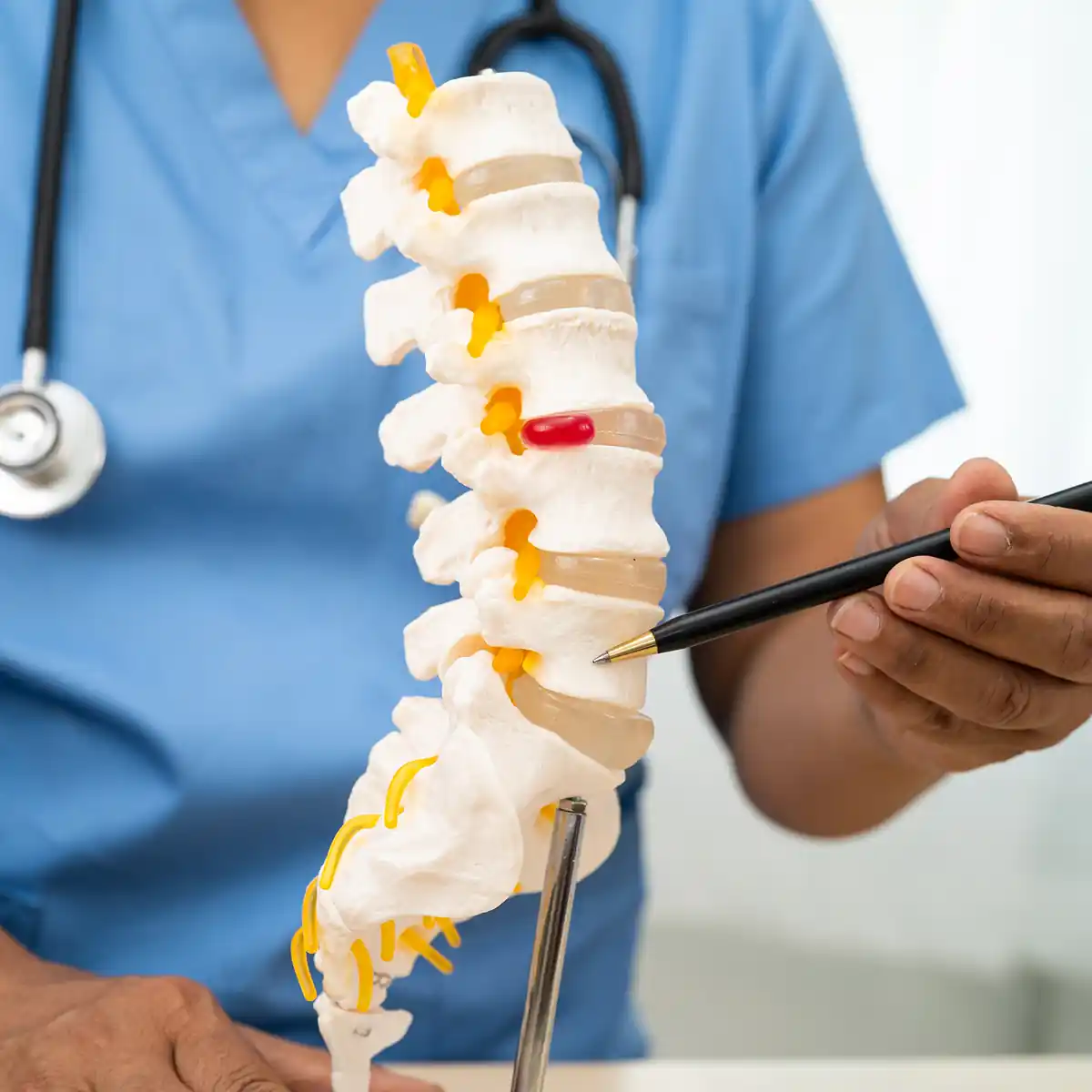
A microdiscectomy procedure is performed through a small incision in the lower back, using a microscope or magnifying loupes to locate the herniated portion of the disc. Only the fragment of disc material pressing on the nerve is removed, leaving the rest of the disc intact. Because the incision and the amount of tissue disturbed are both minimal, most patients recover more quickly than they would from a more extensive spine surgery.
Microdiscectomy surgery is most often recommended for:
Microdiscectomy addresses a specific herniated disc without fusing or removing any spinal segment, which makes it a more targeted procedure than options like lumbar fusion or lumbar decompression. Fusion and decompression are generally reserved for cases involving spinal instability or a narrowed spinal canal, rather than an isolated disc herniation. In some cases, particularly when a patient has recurrent herniation or broader disc degeneration, a total disc replacement may be a more appropriate option than a repeat microdiscectomy.
Attorneys handling cases that involve a lumbar disc herniation diagnosis, and who need an independent medical opinion rather than a referral for treatment, can learn more about our expert witness and legal services.
Microdiscectomy cost varies based on the complexity of the case and how it's being billed, whether through workers' compensation, a personal injury claim, or another arrangement. Because TCCO's patient base is largely referral-based rather than direct-pay, cost is typically discussed and coordinated as part of the case rather than published as a flat rate. Attorneys and physicians with cost-related questions for a specific case are welcome to include that in their referral.
Common lumbar disc herniation symptoms include sciatica, sharp or burning pain radiating from the lower back down one leg, numbness or tingling in the leg or foot, and muscle weakness that can affect walking or standing. Symptoms often worsen with sitting, bending, or certain movements and may improve somewhat with rest, though severe or worsening symptoms typically warrant a surgical evaluation.
Dr. Brett Taylor is a board-certified orthopedic surgeon in St. Louis, MO, with fellowship training in spine surgery and experience across a full range of lumbar and cervical procedures. He evaluates and performs each surgery personally, working directly with referring attorneys and physicians throughout the case.
Referring physicians and attorneys can submit a referral describing the patient or client's diagnosis and relevant history to begin the review process. Once received, Dr. Taylor reviews the case to determine whether microdiscectomy or another approach is the appropriate next step, and next steps are coordinated directly with the referring party.